Whey Permeate: How to Optimize Production Costs Without Sacrificing Quality
What are Whey Permeate and Demineralized Whey?
Defining Whey Permeate
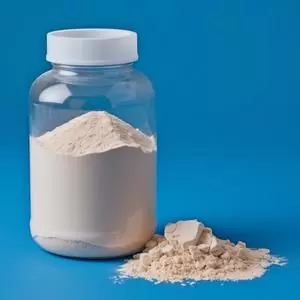
Whey permeate is a co-product derived from the whey processing stream after the removal of proteins and other valuable components. It’s essentially what’s left after ultrafiltration or diafiltration of whey. This process leaves behind a solution rich in lactose and minerals, offering unique properties for various applications. It differs significantly from sweet whey powder or acid whey powder, which retain a higher protein content.
Understanding Demineralized Whey Powder
Demineralized whey powder is produced by removing a portion of the minerals from whey through processes like electrodialysis or ion exchange. The degree of demineralization can vary, resulting in products with different mineral contents. Demineralized whey powder helps improve flavor and functionality in certain applications by reducing the salty or mineral taste often associated with regular whey products.
Key Properties of Whey Permeate and Demineralized Whey
Taste Profiles: From Salty to Neutral
- Whey permeate often has a slightly salty taste due to its mineral content. This can be advantageous in some food formulations where a salty note is desired.
- Demineralized whey powder has a milder, more neutral taste compared to whey permeate. The reduced mineral content makes it an ideal ingredient when a less intense flavor profile is needed.
Mineral Content as a Value Driver
Although the mineral content of whey permeate can contribute to its salty taste, it also makes it a valuable source of essential minerals like calcium, potassium, and phosphorus. This can be a significant advantage in applications where mineral enrichment is desirable.
Physical Properties: The Importance of Flowability
Both whey permeate and demineralized whey powder are typically available in powder form. Their flowability, or how easily they pour and mix, is a crucial factor in manufacturing. High-quality products will exhibit excellent flowability, ensuring ease of handling and consistent blending in various processes.
Versatile Applications: Replacing Traditional Ingredients

Food Applications: A Cost-Effective Alternative
- Soups and Sauces: Whey permeate can partially replace salt, enhancing flavor and reducing sodium chloride dependency.
- Bakery Products: In baked goods, whey permeate can substitute a portion of skimmed milk powder (SMP) or lactose, improving browning and texture.
Animal Feed: Enhancing Nutritional Value
In animal feed formulations, whey permeate provides a cost-effective source of lactose and minerals, contributing to the overall nutritional profile of the feed. It can be particularly beneficial in feed for young animals, aiding in digestion and growth.
Partial Replacement Strategies: Maximizing Cost Savings
The key to successfully incorporating whey permeate or demineralized whey powder lies in strategic partial replacement. This allows manufacturers to retain the desired product characteristics while significantly reducing costs.
The Economic Advantage: Real-World Examples
Example 1: Soup Production
Consider a soup manufacturer using 1000 kg of salt per batch at a cost of $1 per kg. By replacing 20% of the salt with whey permeate (costing $0.50 per kg), the manufacturer saves $100 per batch. Over 100 batches, this translates to a $10,000 saving.
Example 2: Bakery Operations
A bakery using 500 kg of skimmed milk powder (SMP) per batch at a cost of $3 per kg can replace 30% of the SMP with demineralized whey powder (costing $1.50 per kg). This results in a saving of $225 per batch, or $22,500 over 100 batches.
Calculating Your Potential Savings: A Simple Formula
To estimate your potential savings, use the following formula:
(Amount of Ingredient Replaced x Cost Difference per kg) x Number of Batches = Total Savings
Key Considerations for Accurate Cost Analysis
- Ingredient Costs: Obtain accurate pricing for both the original ingredient and the replacement (whey permeate or demineralized whey powder).
- Replacement Ratio: Determine the optimal replacement ratio to maintain product quality and functionality.
- Production Volume: Factor in your production volume (number of batches) to calculate the overall savings potential.
A Smart Solution for Savvy Production
Utilizing whey permeate and demineralized whey powder is a strategic decision that can significantly reduce production costs without compromising product quality. By understanding their properties and applications, manufacturers can optimize their formulations and improve their bottom line.
For specific needs related to reduced minerals whey and other dairy derivatives like Lactose and Permeates, we invite Technologists and Purchasing managers to contact Agrocomplex Sp. z o.o. Poland. We’re ready to provide tailored solutions for your production needs.
Get a wholesale Dry Milk Products supply price right now!
As a professional producer and supplier of Whey Permeate, Agrocomplex Sp. z o.o. has been selling Whey Permeate in Poland since 1992. Therefore, you can be sure that you are buying Whey Permeate from Agrocomplex. Please direct any questions and issues to the email address info@agrocomplex.com.pl, and we will respond within 1 business day.
FAQs: Whey Permeate
-
What is whey permeate?
Whey permeate is a co-product from whey processing after removing proteins and other valuable components, mainly lactose and minerals. -
How does demineralized whey powder differ from whey permeate?
Demineralized whey powder has had a portion of its minerals removed, leading to a milder, more neutral taste compared to the saltier taste of whey permeate. -
What are some food applications for whey permeate?
Whey permeate can be used in soups and sauces to partially replace salt and in bakery products to substitute skimmed milk powder or lactose. -
How can whey permeate be used in animal feed?
Whey permeate provides a cost-effective source of lactose and minerals in animal feed, benefiting digestion and growth, especially in young animals. -
What is the key to successfully incorporating whey permeate or demineralized whey powder?
Strategic partial replacement is key. This allows manufacturers to maintain product characteristics while reducing costs. -
Can you provide an example of cost savings using whey permeate in soup production?
Replacing 20% of salt (at $1/kg) with whey permeate (at $0.50/kg) in a 1000 kg batch saves $100 per batch, or $10,000 over 100 batches. -
How can a bakery save money using demineralized whey powder?
Replacing 30% of skimmed milk powder (SMP, at $3/kg) with demineralized whey powder (at $1.50/kg) in a 500 kg batch saves $225 per batch, or $22,500 over 100 batches. -
What formula can I use to estimate my potential savings?
(Amount of Ingredient Replaced x Cost Difference per kg) x Number of Batches = Total Savings -
What are the key considerations for an accurate cost analysis?
Consider ingredient costs (original & replacement), replacement ratio, and your production volume. -
What makes the flowability of whey permeate and demineralized whey powder important?
Excellent flowability ensures ease of handling and consistent blending in various manufacturing processes.
Our offer