Unlock the Power of Native Whey Protein: A Deep Dive for Ingredient Innovators
The Essence of Native Whey: Beyond Cheese Production
In the realm of dairy ingredients, native whey protein stands apart, offering a unique proposition compared to its more common counterpart, cheese whey. While both originate from milk, their production pathways diverge significantly, resulting in distinct properties and benefits. This difference is crucial for technologists and buyers actively seeking superior protein sources.
Traditional whey protein, often a byproduct of cheese manufacturing, undergoes processes that can denature proteins and alter their natural structure. In contrast, native whey is extracted directly from fresh milk using advanced filtration techniques. This direct extraction minimizes processing, preserving the protein’s integrity and delivering a more high-quality undenatured protein.
What Sets Native Whey Apart?
- Origin: Directly from milk, not a cheese byproduct.
- Processing: Minimally processed to preserve protein structure.
- Quality: Higher purity and bioavailability.
The Technology: Direct Filtration for Superior Purity
Agrocomplex employs state-of-the-art filtration technology to produce native whey protein. This meticulously controlled process, also known as cold microfiltration, begins with carefully selected fresh milk sourced from our trusted dairy farms. The milk undergoes a series of gentle filtrations to separate the whey proteins from other milk components, such as casein and fat. Crucially, this process avoids harsh chemicals, extreme heat, or acidification, which can compromise the integrity of the protein.
The filtration process primarily involves the use of ceramic membranes with defined pore sizes. These membranes act as precise sieves, allowing smaller molecules like water, lactose, and minerals to pass through while retaining the larger whey protein molecules. This selective separation results in a highly concentrated native whey protein isolate with exceptional purity.
Key Stages of Filtration:
- Microfiltration: Removes bacteria and fat.
- Ultrafiltration: Concentrates the whey proteins.
- Diafiltration (optional): Further purifies the whey by removing lactose and minerals.
Why Direct Filtration Matters
Direct filtration technology is an investment in quality. This method ensures that the resulting native protein retains its natural amino acid profile, bioactivity, and functionality. By minimizing denaturation, Agrocomplex delivers a whey protein that offers superior nutritional and functional properties.
The Edge: Benefits of Preserved Structure and Purity
The unique production process of what is native whey protein translates directly into a variety of tangible benefits for product developers and consumers alike. The preservation of the protein’s native structure is paramount, unlocking advantages that are simply not available from conventionally produced whey proteins.
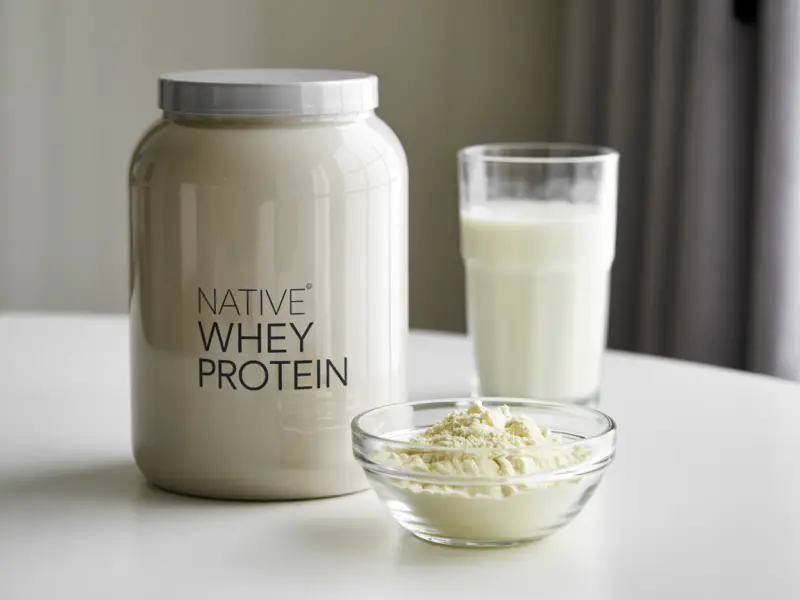
Intact Protein Structure
The gentle filtration process ensures that whey protein native remains largely undenatured. This means the protein’s complex three-dimensional structure, essential for its biological activity, is preserved. Denatured proteins lose some of their functional properties, such as solubility and emulsification, while pure native protein retains these characteristics, making it ideal for a wide range of applications.
Optimized Amino Acid Profile
The amino acid profile of native whey protein closely mirrors that of human muscle tissue. It is particularly rich in essential amino acids (EAAs), including branched-chain amino acids (BCAAs) like leucine, isoleucine, and valine. BCAAs play a crucial role in muscle protein synthesis, making native whey an excellent choice for sports nutrition products designed to support muscle growth and recovery.
Superior Taste and Sensory Experience
Because it is produced without harsh chemicals or high heat, what is a native protein boasts a clean, neutral flavor profile, free from the bitter or off-flavors sometimes associated with conventional whey proteins. This makes it easier to formulate products with delicious and appealing taste profiles, allowing product developers to focus on other flavor components.
Key Benefits Summarized:
- Enhanced Protein Synthesis: Higher BCAA content supports muscle growth.
- Improved Bioavailability: Undenatured protein is more easily digested and absorbed.
- Clean Taste: Allows for versatile flavor formulation.
Applications: Targeting Premium Nutrition Segments
The unique properties of native whey protein make it ideally suited for a variety of high-value applications, particularly in the premium sports nutrition and infant nutrition segments. Its exceptional purity, amino acid profile, and clean taste set it apart from conventional whey proteins, offering a distinct competitive advantage.
Sports Nutrition: Fueling Performance and Recovery
In the sports nutrition market, native whey vs regular whey is clearly a winner. Fitness enthusiasts and athletes are increasingly seeking out protein sources that deliver optimal results. Whey proteins (WPC, WPI, Native) Native whey provides a potent dose of BCAAs to stimulate muscle protein synthesis and accelerate recovery after intense exercise. Its rapid absorption and digestion make it an excellent choice for post-workout recovery shakes and bars.
Infant Nutrition: Nourishing Growth and Development
Infant formula manufacturers recognize the importance of providing high-quality protein that closely mimics the composition of breast milk. Native whey offers a superior alternative to conventional whey proteins, providing a more complete and balanced amino acid profile that supports healthy growth and development in infants. Its clean taste and excellent digestibility make it well-tolerated by even the most sensitive digestive systems.
The Future is Native: A Promising Ingredient Landscape
Native protein represents a significant advancement in dairy ingredient technology. Its unique production process and exceptional nutritional profile position it as a key ingredient for manufacturers seeking to create high-performance products in the sports nutrition, infant nutrition, and healthy aging categories.
As consumer demand for clean-label, high-quality protein sources continues to grow, what is native whey is poised to become an increasingly important ingredient in the future of food and nutrition. At Agrocomplex, we are committed to providing our customers with the highest quality native whey protein, backed by rigorous quality control and expert technical support.
For technologists and buyers seeking innovative ingredients that deliver superior performance and nutritional value, native whey protein is a compelling choice. Agrocomplex is ready to partner with you in developing groundbreaking products that meet the evolving needs of consumers.
To learn more about our native whey offerings and how Agrocomplex can help you formulate the next generation of high-performance products, contact our team of expert technologists and buyers today.
Get a wholesale Dry Milk Products supply price right now!
As a professional producer and supplier of Native Whey, Agrocomplex Sp. z o.o. has been selling Native Whey in Poland since 1992. Therefore, you can be sure that you are buying Native Whey from Agrocomplex. Please direct any questions and issues to the email address info@agrocomplex.com.pl, and we will respond within 1 business day.
FAQs: Power of Native Whey Protein
-
What is native whey protein and how does it differ from traditional whey protein?
Native whey protein is extracted directly from fresh milk using advanced filtration techniques, minimizing processing and preserving the protein's integrity. Traditional whey protein, a byproduct of cheese manufacturing, undergoes processes that can denature proteins and alter their natural structure.
-
What are the key advantages of native whey protein compared to conventional whey?
Native whey protein offers higher purity and bioavailability, an intact protein structure, an optimized amino acid profile, and a cleaner, more neutral taste.
-
How is native whey protein produced?
Native whey protein is produced using direct filtration technology, also known as cold microfiltration. This involves gently separating whey proteins from other milk components using ceramic membranes, avoiding harsh chemicals, extreme heat, or acidification.
-
What are the key stages of the filtration process for native whey protein?
The filtration process typically involves microfiltration (to remove bacteria and fat), ultrafiltration (to concentrate the whey proteins), and diafiltration (optional, to further purify the whey by removing lactose and minerals).
-
Why is direct filtration important for the quality of native whey protein?
Direct filtration ensures that the native protein retains its natural amino acid profile, bioactivity, and functionality by minimizing denaturation.
-
How does the intact protein structure benefit consumers?
The gentle filtration process ensures the whey protein remains largely undenatured. This means the protein's complex three-dimensional structure, essential for its biological activity, is preserved, retaining functional properties like solubility and emulsification.
-
Why is native whey protein beneficial for sports nutrition?
Native whey protein is rich in essential amino acids (EAAs), including branched-chain amino acids (BCAAs), which stimulate muscle protein synthesis and accelerate recovery after intense exercise. Its rapid absorption and digestion make it ideal for post-workout recovery shakes and bars.
-
What makes native whey protein suitable for infant nutrition?
Native whey protein offers a superior alternative to conventional whey proteins in infant formula, providing a more complete and balanced amino acid profile that supports healthy growth and development. Its clean taste and excellent digestibility make it well-tolerated by even the most sensitive digestive systems.
-
What applications are best suited for native whey protein?
Native whey protein is ideally suited for high-value applications, particularly in the premium sports nutrition and infant nutrition segments, as well as healthy aging categories.
-
How is native whey protein different in taste compared to regular whey protein?
Because it is produced without harsh chemicals or high heat, native whey protein boasts a clean, neutral flavor profile, free from the bitter or off-flavors sometimes associated with conventional whey proteins, making it easier to formulate products with delicious and appealing taste profiles.
Our offer